


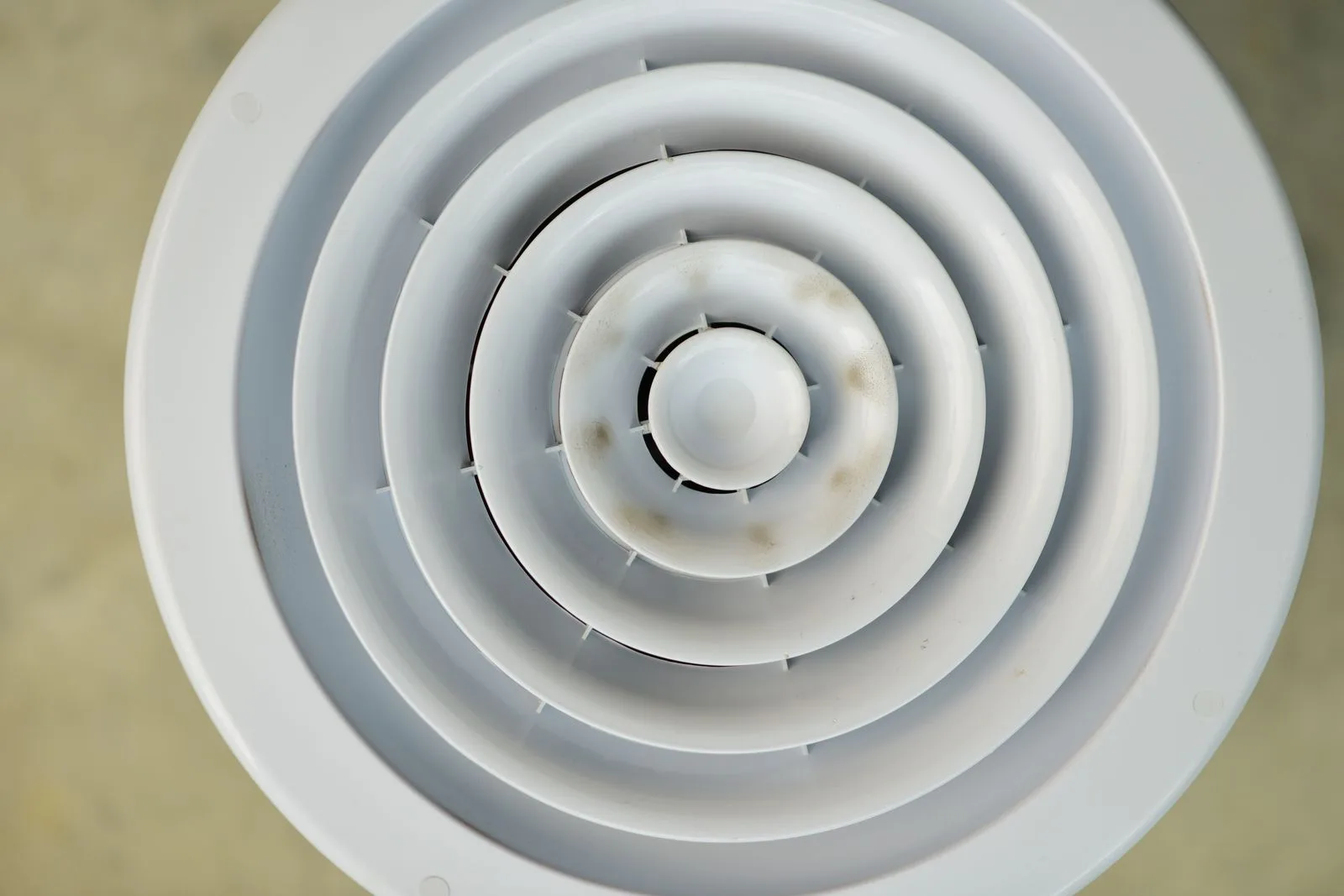
Jacksonville’s air conditioners barely get a break. Even in October, with the worst of the summer heat behind us, most homes here are still cooling and dehumidifying for hours every day. That constant work, combined with humid Florida air, makes your HVAC system one of the most common places for mold to settle in. If you’ve noticed a musty smell when the system kicks on, or dark speckling around a vent, here is what is usually going on, why a quick cleaning often isn’t enough, and what should happen first.
Why does mold grow in Jacksonville HVAC systems?
Mold needs three things: moisture, a food source, and time. An air conditioning system supplies the first almost by design. As warm, humid air passes over the cold evaporator coil, water condenses out of it and drains away. When anything slows that process down, the system stays damp, and the dust that collects inside gives mold something to feed on.
Common causes in Northeast Florida homes include:
- A clogged or slow condensate drain line. Water backs up in the drain pan instead of leaving the house.
- Oversized or short-cycling equipment. A unit that shuts off before it has run long enough never fully dries the coil or removes humidity from the house.
- Leaky or uninsulated ducts in the attic. Cold ducts in a hot, humid attic sweat, and that moisture can wet insulation and nearby framing.
- Indoor humidity that stays high. Even a properly working system can’t keep up if the home sits above the range recommended by the EPA, which says indoor humidity should stay below 60 percent, ideally between 30 and 50 percent.
What are the signs of mold in an AC system or air vents?
Some signs are visible. Others you can only smell or feel:
- A musty, earthy odor that is strongest when the system first turns on
- Dark or fuzzy spots on or around supply vents, or on the ceiling near them
- Visible growth on accessible parts like the drain pan or air handler
- Allergy-type symptoms, such as sneezing, congestion, or itchy eyes, that ease when you leave the house
- Rooms that stay clammy or humid even while the AC is running
Keep in mind that dark spots on a vent cover are not always mold. Dust, soot, and condensation residue can look similar. The EPA makes the same point: a positive determination of whether something is mold can be made only by an expert and may require laboratory analysis. Guessing from color is exactly how homeowners end up paying to clean something that was never the problem.
Why does HVAC mold keep coming back after cleaning?
This is the part most people don’t hear up front. Cleaning removes what is visible, but it doesn’t remove the reason the mold grew. The EPA is direct about it: if the conditions causing the mold growth in the first place are not corrected, mold growth will recur.
In a Jacksonville home that usually means the real problem sits somewhere upstream: a drain line that needs clearing, ductwork sweating in the attic, a humidity problem the system was never sized to handle, or a hidden leak feeding it all. A cleaning crew can scrub every vent and the mold can be back by spring.
Should I test before I hire an HVAC mold cleaning company?
In most cases, yes. A mold test answers the questions that decide what you actually need:
- Is it mold, and which species?
- Is the contamination only in the HVAC system, or is it also in the surrounding air, the attic, or the walls?
- Where is the moisture coming from?
- How much of the system, if any, really needs cleaning or replacing?
A basic comparison between indoor air and outdoor air also shows whether your system is circulating elevated spore levels through the house. If air quality is your main worry, our indoor air quality testing looks at that bigger picture.
There is also a fairness issue worth knowing about. Under Florida Statute § 468.8419, the company that assesses mold in your home cannot also be the one that performs the remediation. An independent assessor has no stake in selling you a bigger job, so you get a written scope you can hand to any HVAC or remediation company and compare quotes fairly.
What can I do right now to reduce the risk?
None of this replaces an assessment, but these steps help in the meantime:
- Change your air filter on schedule, usually every one to three months
- Check that the condensate drain line and pan are draining and not holding standing water
- Keep indoor humidity under control, and avoid setting the thermostat so high that the system runs too little to dehumidify
- Don’t spray bleach or disinfectant into vents or ductwork, and don’t run the system more than needed if you can see significant growth, since that spreads spores through the house
- Fix roof leaks, plumbing leaks, and attic condensation quickly. Our posts on hidden sources of mold after heavy rain and attic mold inspection cover the usual culprits
Find out what is actually in your system
JRG Mold Inspection & Testing is a team of NORMI-certified mold assessors and licensed public adjusters serving Jacksonville, Jacksonville Beach, St. Augustine, Ponte Vedra, Nocatee, Yulee, Fernandina Beach, and Palm Coast. If your AC smells musty, or you’ve spotted something on a vent and aren’t sure what it is, we can tell you what it is, how far it goes, and what needs to happen next, before you spend money on cleaning that may not solve the problem.
Call JRG Mold Inspection & Testing today at (904) 600-4992 or request your free phone consult online.